
















A managed senior squad, with monthly capacity and clear delivery reviews. Build your roadmap without running another hiring cycle.
Software development as a service, with a squad you can hold to account

What it is
Software development as a service gives you a managed senior squad on monthly capacity. Sparkr Digitals coordinates discovery, design, engineering and release around an agreed product backlog.
It suits teams with a continuing roadmap rather than a single finished specification. You set business priorities; we plan the delivery work, expose dependencies and review progress with your product owner. Capacity is explicit, not an open-ended promise of output.
We begin with the existing code, architecture, access controls and release process. Onboarding is planned in weeks, with timing agreed after that review. Sprint reviews surface blockers and acceptance decisions; monthly steering reviews cover capacity, spend and the next priorities. Code and project IP ownership are written into the agreement, alongside third-party licence exclusions. Repositories and documentation remain accessible to your organisation, so continuity does not depend on one supplier.
The problem
Your roadmap keeps growing. Your delivery capacity should not depend on the next hire.
Where managed software teams lose accountability
A monthly team arrangement only works when capacity, priorities and responsibility are explicit. Buying a list of roles does not settle who reviews code, accepts releases or raises a dependency. We define those responsibilities before the first delivery cycle, then keep them visible as the backlog changes.
The traps
Trap 0101 / 04

Capacity without ownership
More people, no delivery owner
Adding developers can increase coordination work without improving release readiness. When nobody owns dependencies, code review or acceptance, tickets move but usable software waits. We agree a delivery lead, decision owners and escalation routes at onboarding. Your product owner sets priorities; the squad makes the technical work and its risks visible in each review.
Trap 0202 / 04

An undefined monthly commitment
A retainer with no capacity plan
A flat monthly invoice says little about who is available, which skills are included or what happens during leave. We document the squad, available capacity and coverage arrangements. Estimates guide planning rather than promise unlimited output. Changes to team size or specialist input are discussed before they become additional commitments.
Trap 0303 / 04

Progress hidden in task counts
Busy sprints, uncertain releases
A closed ticket is not evidence that a workflow is ready for operations. Testing, access decisions and acceptance can still be unresolved. We review working increments against agreed criteria and distinguish code completion from release readiness. Risks, blockers and approvals stay in the delivery record, with an owner for the next action.
Trap 0404 / 04

A supplier becomes a dependency
Your code, outside your control
When repositories, deployment credentials and architectural knowledge sit only with a supplier, changing direction becomes difficult. We agree code and IP ownership, keep delivery records accessible and document deployment and support procedures. Third-party licences are identified separately. Exit planning belongs in the engagement terms, not in a negotiation after notice is given.
The process
From onboarding to a governed delivery rhythm
We establish the squad, access and backlog before committing a delivery plan. Weekly reviews show working software and outstanding decisions. Monthly governance reviews address capacity, priorities and spend. Your product owner stays close to the work, with a clear route for resolving scope and technical trade-offs.
Step 01
Scope the capacity
Agree the product goals, required skills, monthly capacity and decision owners. Record dependencies and what is outside the engagement.
Step 02
Onboard the squad
Review code, environments and access. Plan onboarding in weeks, subject to repository access and the condition of the existing system.
Step 03
Plan and deliver
Prioritise a manageable backlog, build in increments and include code review, tests and documentation in the work rather than postponing them.

Step 04
Review and release
Demonstrate working increments weekly. Record acceptance, release risks and rollback steps before moving agreed changes into production.
Step 05
Govern the work
Review monthly capacity, spend and priorities. Adjust the next cycle and keep handover records current as the product evolves.
What you get
A managed squad, with the evidence to govern it.
Named squad and monthly capacity
An agreed skills mix, available capacity and coverage plan, with a delivery lead and clear client decision owners.
Prioritised delivery backlog
A working backlog linked to product goals, with estimates, dependencies and acceptance criteria.
Reviewed code and release records
Source changes, test results and release notes available to your team for review and continuity.
Weekly delivery reviews
Working increments, blockers and decisions reviewed together, with accountable owners for follow-up.
Monthly governance record
Capacity, spend, risks and next priorities recorded so commercial and product decisions stay connected.
Code ownership and IP terms
Written ownership terms for project code and IP, with third-party components and licence restrictions identified.
Onboarding and exit documentation
Environment guidance, access records and handover notes that support internal teams and future suppliers.
Selected work
Selected product and interface work
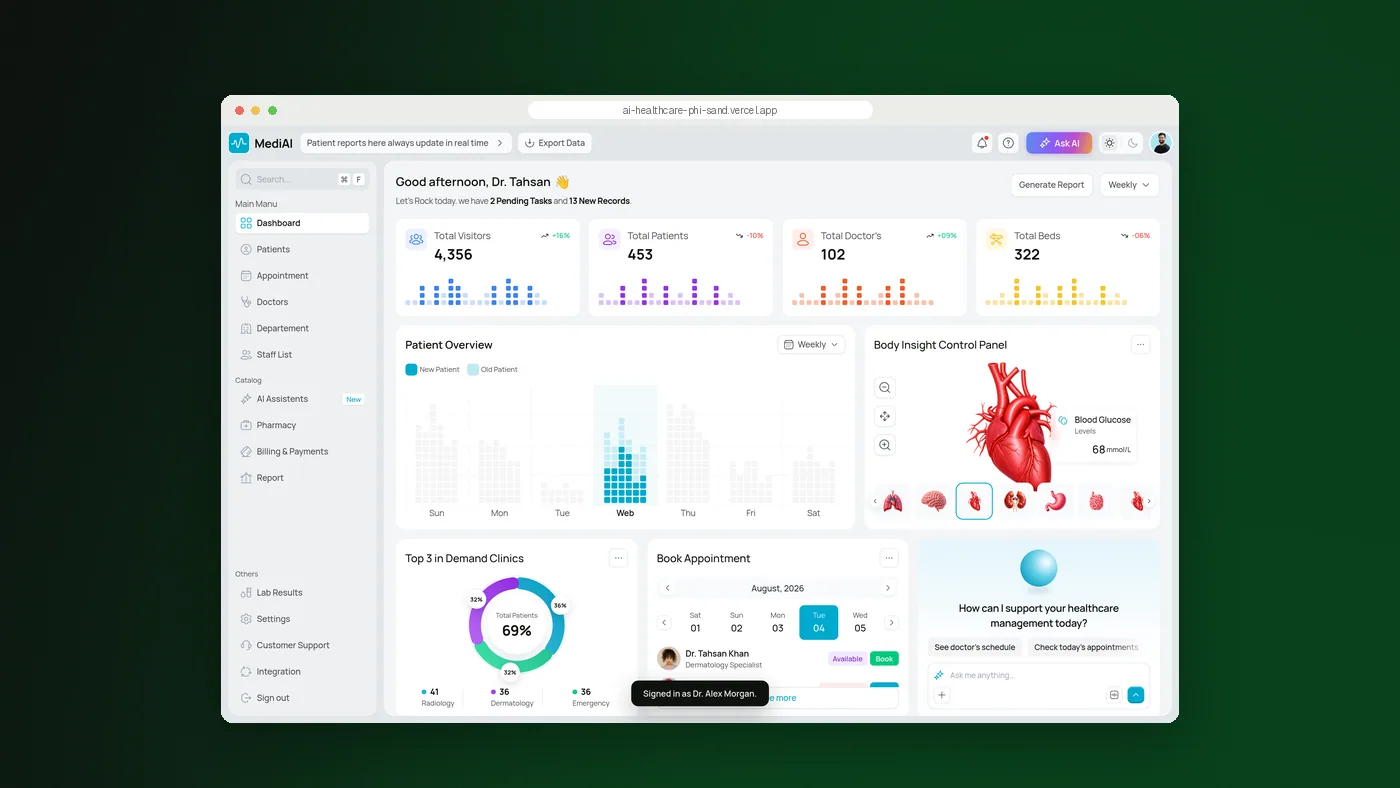 Interface & prototype
MediAI: organising clinical information in a considered workspace
 Product design & web app
Relix CRM: connecting leads, deal stages and the invoicing handoff
 Product design & web app
Victora: a product interface for school administration workflows
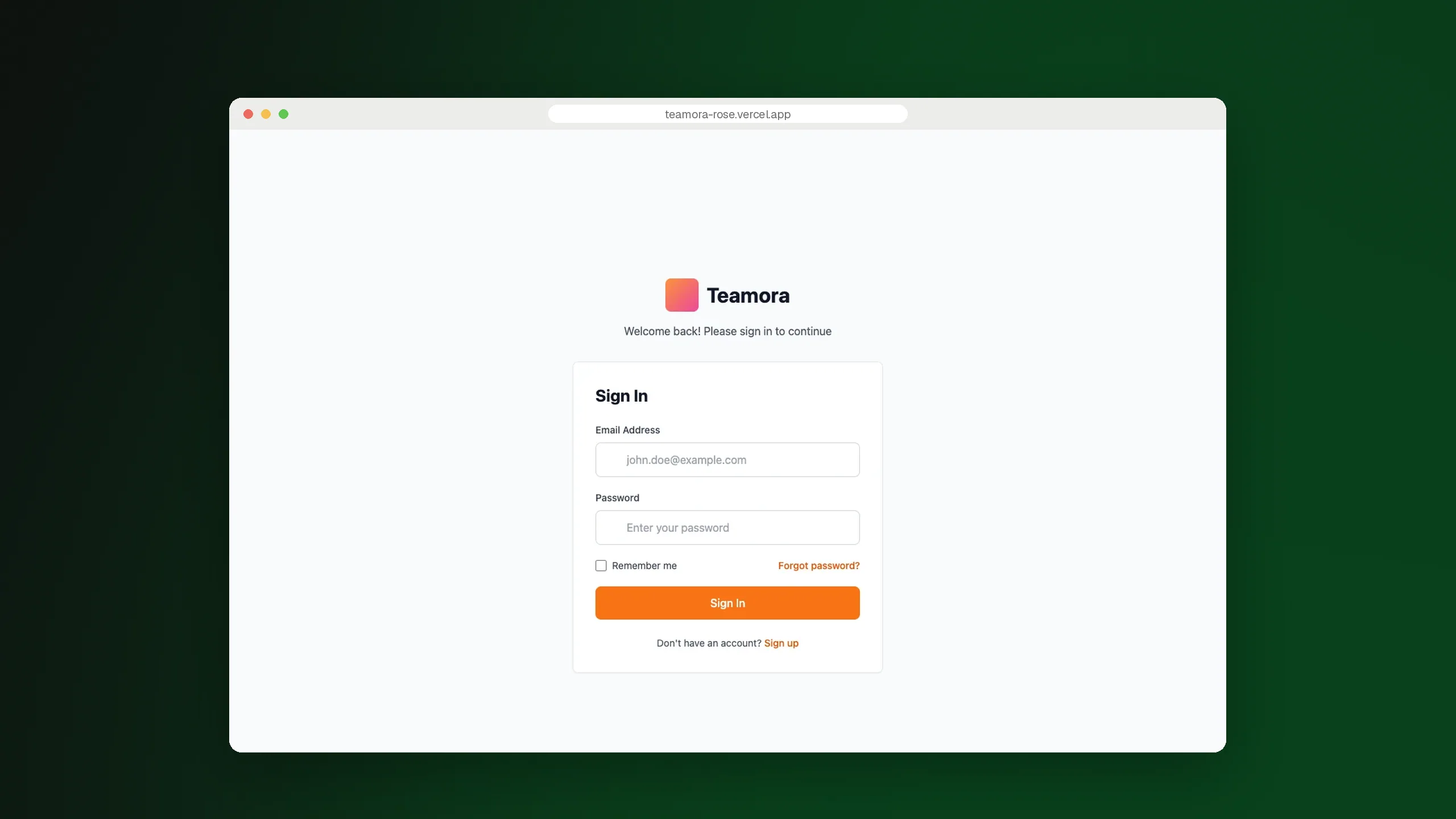 Product design & web app
Teamora: bringing team conversations and organised work into one workspace
What does the monthly fee cover?
The proposal defines the squad, skills, monthly capacity and delivery responsibilities. It should also identify specialist work, infrastructure charges and third-party subscriptions that are excluded. We agree the review cadence and how changes are approved. Capacity buys a defined team commitment, not unlimited features; the backlog is prioritised within that commitment.
How quickly can a squad start delivering?
We plan onboarding in weeks rather than assume the team can ship on day one. Timing depends on repository access, environment readiness, documentation and the state of the code. The initial review produces an onboarding plan and first backlog. Where those foundations are missing, setting them up becomes explicit work, not a hidden delay.
Is this staff augmentation or managed delivery?
It is managed delivery: the engagement includes coordination, engineering review and a visible release process, not just individual developers. Your organisation still appoints a product owner to set priorities and accept business outcomes. We agree who approves architecture, access and production changes so responsibility is not blurred between the squad and your internal teams.
Who owns the source code and project IP?
Ownership is written into the contract. We structure the engagement so your organisation owns the commissioned code and project IP under the agreed terms, with access to repositories and delivery documentation. Existing tools, third-party libraries and their licences need separate treatment. Those exclusions should be listed before work begins, alongside any payment-related transfer conditions.
How do you keep monthly work accountable?
Weekly reviews cover working software, acceptance criteria, blockers and decisions. Monthly governance reviews cover capacity, spend, delivery risks and upcoming priorities. We distinguish a completed development task from a production-ready release. That lets you see whether a dependency, a technical issue or an outstanding business decision is limiting progress, rather than relying on ticket counts alone.
Can we scale the squad up or down?
Yes. We agree changes to monthly capacity, skills and notice periods before scaling up or down. Changing priorities also changes what fits in that capacity. We assess the effect on work in progress, dependencies and release dates before moving items. Urgent production work needs an agreed triage route. If demand consistently exceeds capacity, we discuss a revised team commitment rather than quietly accumulating unfinished work.
Can the squad work alongside our engineers?
Yes. We agree repository conventions, review responsibilities, access boundaries and deployment permissions with your engineers. Existing architecture and tooling are reviewed before changes are proposed. Shared documentation and joint technical reviews help keep knowledge within your organisation; a managed squad should not create a parallel delivery process that your own team cannot inspect.
What happens if we pause or end the service?
Notice periods, final billing and handover duties belong in the agreement. A planned exit should include current source, backlog status, architecture notes, deployment instructions and a review of supplier access. Any ongoing support is scoped separately. Keeping those records current during delivery makes a pause more manageable than trying to reconstruct them at the end.

Software development as a service, or a fixed project? How to choose
6 min read
Compare monthly capacity with a defined project scope: ownership, planning, changing priorities and the decisions that belong in the agreement.

Designing internal tools people actually use
6 min read
Lessons from Relix, Victora and Interoly on tasks, handoffs and interfaces. Start with the work operators need to complete, not a screen inventory.

What a regulator-ready VAPT report contains
6 min read
Examine the scope, evidence, remediation guidance and retest records that make a security assessment useful to engineering and oversight teams.

The 72-hour clock: what NDPA and the GAID demand of your systems
6 min read
Consider incident records, escalation paths and data visibility when preparing systems to support breach assessment and notification decisions.

Sophos or Fortinet? Choosing the security stack for a Nigerian enterprise
6 min read
Compare security-stack requirements through deployment constraints, operational ownership and the evidence your team needs for ongoing review.
Other services