














A software contract allocates decisions as well as money. A team building a reconciliation service or improving a clinical workspace needs to know who sets priorities, who approves releases and who owns the code. For healthcare teams , these decisions also need clear boundaries around sensitive records and access.
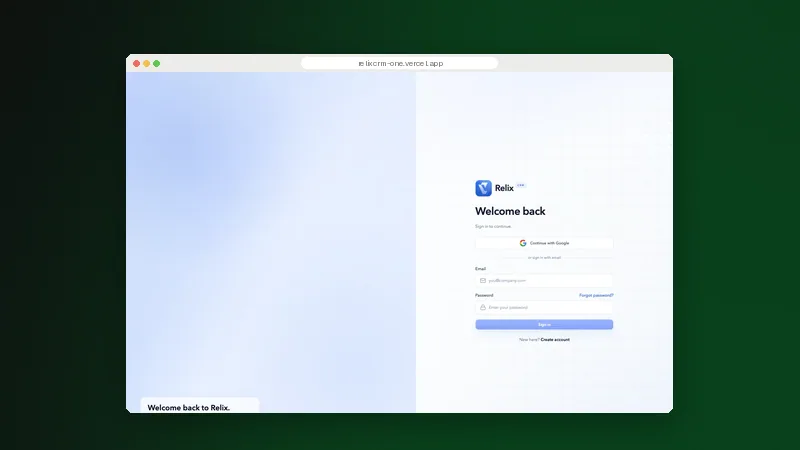
Our product work illustrates why scope should follow the workflow. Consider Relix CRM, Victora, and Teamora: each connects several tasks. The contract should make those dependencies visible before delivery begins.
Why fixed scope can become fragile
A fixed project works best when the outcome can be described and accepted before implementation. Trouble starts when a buyer fixes the price while leaving integrations, data quality and approval rules unresolved. Those uncertainties do not disappear; they return as exclusions, change requests or disputed acceptance.
An ongoing engagement takes a different starting point. Our Software development as a service model is relevant when priorities need regular review. The commercial agreement should still specify capacity, responsibilities and reporting, because ongoing delivery is not unlimited delivery. A monthly commitment needs explicit boundaries just as a project does.
For a bounded deliverable, consider Custom software development . Agree the scope, dependencies and acceptance evidence first. A defined invoice workflow with stable inputs may suit a project; a platform with a changing backlog may need continuing capacity. Neither model removes the need for discovery.
Compare scope, capacity and acceptance before comparing price
A fixed contract typically prices an agreed deliverable. An ongoing arrangement typically funds agreed delivery capacity over time. Actual terms vary, so procurement should compare the signed responsibilities, not the label on the proposal. Separate the decision into three questions:
- Scope · What is included: name the workflows, integrations, exclusions and assumptions that underpin the estimate.
- Capacity · Who is available: define the delivery roles, allocation, review cadence and how blocked work affects the plan.
- Acceptance · What proves completion: agree test evidence, authorised reviewers, response windows and how defects differ from new requests.
A fixed project needs controlled changes. An ongoing engagement needs an ordered backlog and a buyer who can make timely decisions. Both need release checks, security review and a named person accountable for acceptance.
Write the acceptance rule first
Before comparing proposals, describe a business task that must work end to end. For an invoice feature, specify source records, approval rules, permissions and expected outputs. Ask the delivery team to demonstrate it.
For example: an authorised operator can prepare an invoice from an approved deal, verify the required fields and submit it for review. Include rejected approvals, duplicate submissions and missing data. This gives procurement a basis for comparing scope rather than attractive but unequal feature lists.
Expose dependencies before signing
Integration uncertainty changes delivery risk. The workflow in Relix CRM connects contacts, deal stages and billing. For a commissioned implementation, the buyer would need to establish how records move between those tasks. That dependency is part of the scope, not an implementation detail to settle after contracting. Cloud & API engineering can help define interfaces and failure handling before a dependent workflow is priced.
Record the dependencies by their effect on delivery:
- External API access requires documentation, test credentials and an owner able to resolve upstream failures.
- Data migration requires sample records, mapping rules, reconciliation checks and a rollback decision.
- Security and access require role definitions, environment boundaries, secrets handling and agreed review evidence.
- Business approvals require named reviewers and response windows so blocked decisions are visible in the delivery plan.
Give every price a boundary
Compare total commitments, not just headline fees. Ask what discovery, testing, hosting, third-party licences, support and handover include. For a fixed project, establish the change-control rate and process. For ongoing delivery, establish the capacity commitment, notice period and treatment of unused or blocked capacity. No model is inherently cheaper: the useful comparison is the cost of an accepted outcome under stated assumptions.
Contract controls worth agreeing early
- Name the decision-maker. One accountable product owner should resolve competing priorities and approve scope changes.
- Make progress inspectable. Review working increments, test evidence and blockers rather than relying only on status slides.
- Separate support from delivery. Specify incident cover, defect correction and maintenance; do not assume a backlog buys all three.
- Document ownership and exit, including repositories, infrastructure accounts, third-party licences and the timing of IP transfer.
- Keep a decision record. Record approvals, exclusions and changed assumptions so the delivery history remains understandable.
Checklist: which delivery model fits your next release?
- Can the required outcome be described and tested before implementation?
- Are integration access, sample data and business rules available?
- Can a product owner review priorities throughout the engagement?
- Are acceptance, defects and change requests defined separately?
- Are security review and deployment responsibilities explicit?
- Do ownership, support and exit terms survive the final payment?
- Would a short discovery phase resolve uncertainty before either contract?
Start with the workflow and then choose the commercial structure for your Software & Productwork. The same discipline matters when designing operational interfaces, as discussed in Designing internal tools people actually use. If the scope or delivery responsibilities remain unclear, discuss the brief with us.